“Discrepancy” Tab
(This tab only appears if this feature is enabled in your account.)
What is it?
The Discrepancy tab allows you to define which discrepancies Dost should detect and alert you about.
For example: differences between the invoice total and the sum of line items, inconsistent tax rates, or mismatches between purchase orders and invoices.
What is it used for? (Business Impact)
- Detects errors and inconsistencies before they reach your ERP or accounting system.
- Reduces the risk of paying incorrect invoices.
- Saves team time by automatically highlighting issues that require closer review.
When Do I Use It?
- During initial setup, to define the level of control you want over discrepancies.
- When your company establishes new control policies (for example, tolerance rules between purchase orders and invoices).
How Do I Do It? (Steps + Visual Guide)
1. Access the “Discrepancy” Tab
Go to Settings > Document.
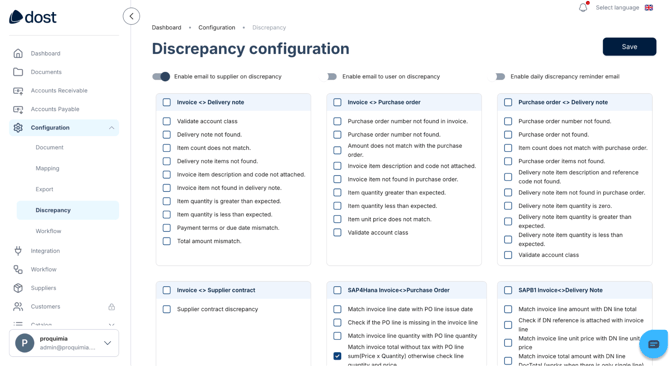
2. Enable the Types of Discrepancies You Want to Detect
Examples include:
- Differences in totals
- Differences in taxes
- Purchase order vs. invoice mismatches
Select which discrepancy types Dost should monitor.
3. Configure Thresholds or Tolerances (If Applicable)
For example, allow a small difference (percentage or fixed amount) without triggering a discrepancy alert.
In the image below, you can see the Discrepancy configuration screen showing the available discrepancy types and toggles.
Best Practices
- Do not enable all discrepancy types if your team will not actively manage them—prioritize the ones that matter most.
- Clearly define internally what should happen when Dost flags a discrepancy (who reviews it and what the next steps are).